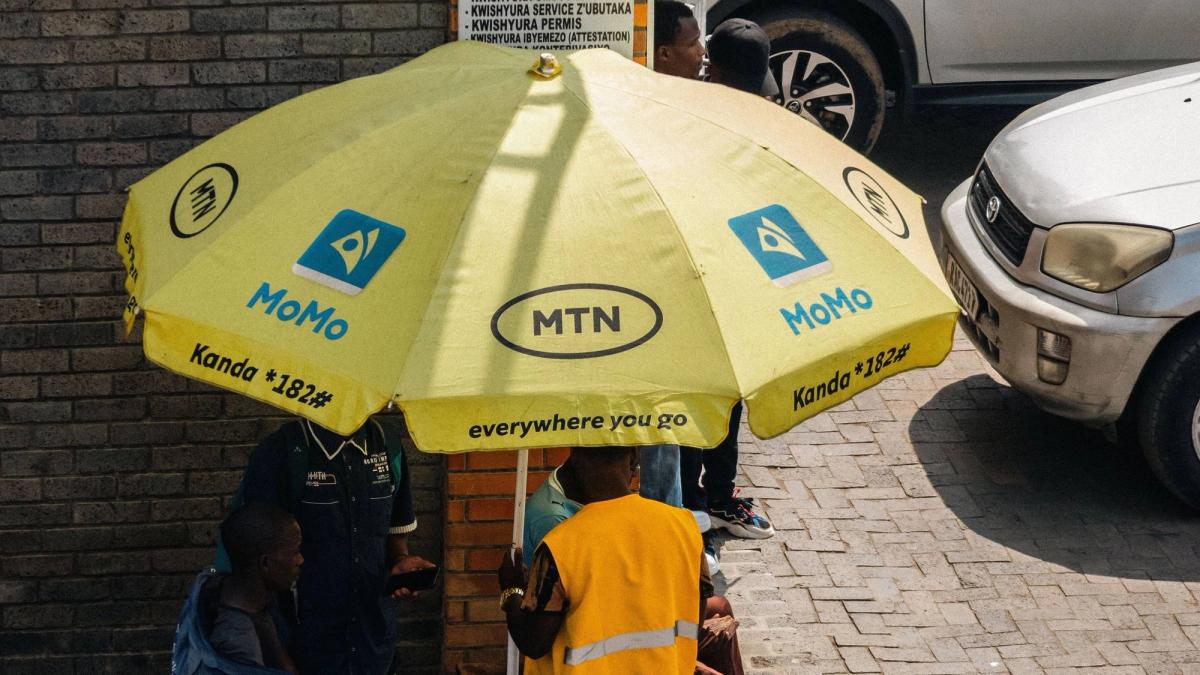
You check your MoMo balance and it's lower than you expected, and you can't say exactly where it went.
This happens because mobile money is built to be frictionless. It's tap and PIN, often offline, and you never physically feel the money leave. Every transaction sends you an SMS, so the full record is already on your phone. It's just spread across hundreds of messages no one is going to read and total up by hand.
The information exists. It's just not in a form you can use. This guide explains why mobile money is so easy to lose track of, which spending people consistently miss, and how to see your full picture without doing maths every night.
Pebla reads your mobile money SMS on Android, sorts every transaction into categories, and shows you where your money actually went this month. It's free. The rest of this guide explains why your balance keeps disappearing and what to do about it.
Why mobile money disappears without you noticing
Cash gives you feedback. You watch the notes leave your hand and the wallet gets thinner. Mobile money removes that feedback completely, which is what makes it convenient and also what makes it vanish.
Each payment is a few taps. On its own, none of them register as a real event. A moto fare. Airtime. A plate of food. Your share of dinner. Individually they are forgettable, and that is the problem, because the forgettable payments are the ones that make up most of your month.
The record of all of it arrives as SMS. MTN and Airtel both text you after every transaction, so technically you have a complete log of your spending sitting in your messages right now. In practice nobody reads it. Scrolling hundreds of texts and adding them up is not something people do, so the log might as well not exist.
The spending people always underestimate
When people finally see their spending sorted into categories, the same three surprise them, and it is never the big purchases.
Airtime and data. You buy it in small amounts, a thousand or two at a time, so each purchase feels like nothing. You also buy it constantly. Frequent and small adds up faster than rare and large, and the monthly airtime total is the number that shocks people most.
Everyday food. Not the restaurant nights you remember, but the daily spending. Coffee, a brochette on the way home, a quick lunch. Each one is too small to register. Together they are often the biggest flexible cost in the month.
Transport. A single moto fare feels insignificant. Three or four a day, every day, is a serious figure by the end of the month.
The pattern holds for almost everyone. The big, memorable purchases are not what catch you out. The small, frequent, invisible ones are.
How to actually see your spending
You have three realistic options.
The manual route is to read every SMS and build a spreadsheet. It works for about a week, then life happens and you stop. Nobody sustains this.
The statement route is to pull your MoMo transaction history. Better than nothing, but it is a flat list with no categories and no patterns, so you can see the transactions without ever seeing where your money is actually going.
The third option is to let an app read and organise it for you. This is what Pebla does. On Android, Pebla reads the mobile money SMS already on your phone, sorts every transaction into categories, and shows you the month at a glance: how much went to airtime, food, transport, and bills. You go from a scroll of texts to a clear picture.
It is free. Some apps charge you to view your own spending history. We do not think you should pay to understand your own money.
Test how well you know your spending
Try this before you look at any data. Write down what you think you spent on airtime last month, just a number from memory. Then find the real figure.
Most people are wrong, and not by a small margin. The gap between what people assume they spend and what they actually spend is routinely large enough to change how they think about a whole month. That gap is the entire problem in one number, because you cannot manage spending you have never actually seen.
What happens after you see it is the useful part. Nothing dramatic. You notice the airtime total and move to a bundle. You see the food number and cook a couple more nights a week. You set a category budget and the app warns you when you are close, so the end of the month stops being a surprise.
This is not about spending less for its own sake. It is about spending on purpose, so the choices are yours instead of accidental.
See your money clearly
The answer to "where does my money go" has been on your phone the whole time, in messages you were never going to read, in a format you were never going to total up.
Pebla reads them, sorts them, and gives you back the picture, for free.
Download Pebla and see your full spending history today, on the App Store and Google Play.
Related: Track your spending for one week · Why small purchases add up to so much · How to start saving when money is tight